
Tick-Borne Disease
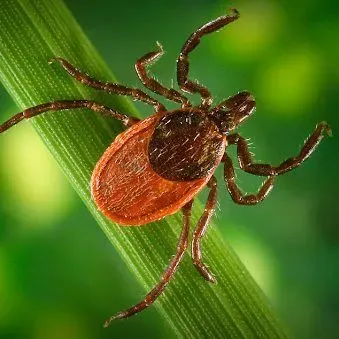
What are Ticks?
Ticks are insects that tend to stay and feed on warm-blooded bodies, like animals. These pests are found in wooded areas with tall grass, where they wait for a host to latch onto. Ticks may nestle into the fur of your pet. Ticks bite your pet and draw blood from it. These insects are small and can easily go undetected, even after biting the carrier.
What is Tick-Borne Disease?
Any disease that is transmitted through the bite of an infected tick is a tick-borne disease.
Canine and Feline Tick-Borne Diseases
The tick-borne diseases affecting canines are Ehrlichiosis, Lyme Disease, and Anaplasmosis. The primary tick-borne disease affecting felines is Bobcat Fever.

Tick-Borne Disease in Dogs
While there are many tick-borne diseases that can infect dogs, the most common ones tested at South Side Animal Clinic are Ehrlichiosis, Lyme Disease, and Anaplasmosis.
Ehrlichiosis
Ehrlichiosis is a tick-borne infectious disease found in dogs. This disease is usually carried by the brown dog tick and is transmitted to the dog when bitten by an infected tick. Signs of Ehrlichiosis are divided into 3 stages depending on how long the dog has had the disease: acute, sub-clinical, and chronic. Symptoms of Ehrlichiosis can be fever, weight loss, respiratory distress, ejected scalera (whites of the eyes are red and blood shot), swollen lymph nodes, and bleeding disorders. Doxycycline is used in traditional veterinary medicine to treat Ehrlichiosis, but herbal tinctures are used at South Side Animal Clinic.
Lyme Disease
Lyme disease is caused by bacteria called Borrelia burgdorferi. Lyme disease is transmitted to your dog through tick bites. Lyme disease is most commonly carried through black-legged ticks, or deer ticks. Immature deer ticks are most common vectors of Lyme disease. Clinical signs in your pet can be lethargy, refusing food, lameness, joint swelling, and swollen lymph nodes. Doxycycline is used in traditional veterinary medicine to treat Lyme, but herbal tinctures are used at South Side Animal Clinic.
Anaplasmosis
Anaplasmosis is a tick-borne disease caused by the infectious bacterial organism Anaplasma phagocytophilum. It is transmitted through bites of the deer tick and the Western black-legged tick. Symptoms include loss of appetite, lethargy, lameness, joint pane, and fever. Anaplasmosis is treated with Doxycycline in traditional veterinary medicine, but here at South Side Animal Clinic, herbal tinctures are used instead.

Tick-Borne Disease in Cats
The primary tick-borne disease in cats is called Bobcat Fever. Clinically known as Cytaux-zoonosis, Bobcat Fever is transmitted to your cat through ticks infected with the disease. Clinical symptoms include lethargy, refusal of food, and a high fever. The most notable signs are jaundice and the third eyelid showing more prominently. Bobcat Fever is a fatal disease, and most cats die within 3 days after the signs and symptoms begin. If you suspect that your cat may have Bobcat Fever, contact South Side Animal Clinic right away to determine how to proceed in the best interest of your animal.